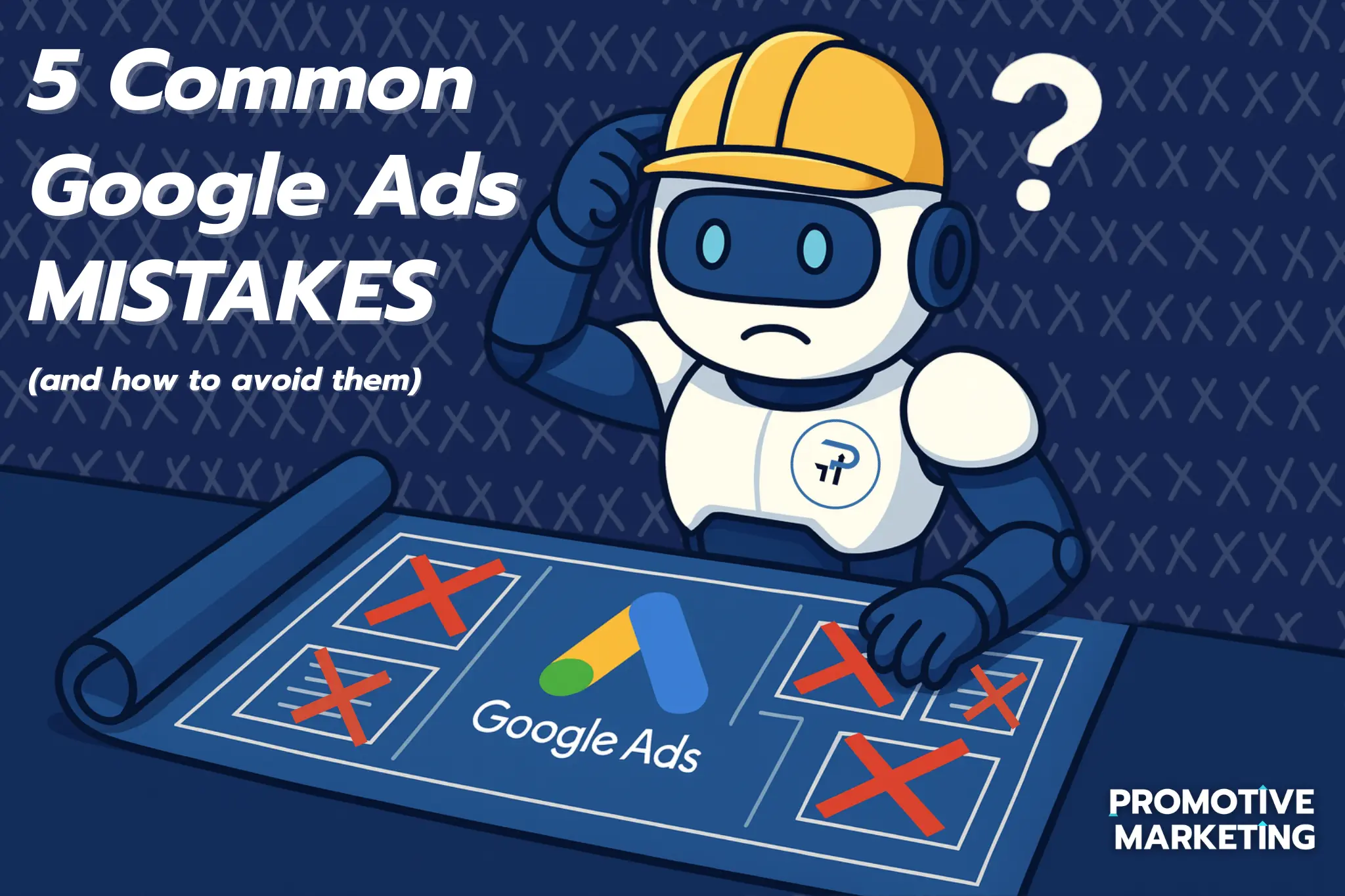
The Top 5 Google Ads Mistakes Roofing Contractors Make in 2026
Google Ads can absolutely help roofing companies grow.
But for a lot of contractors, Google Ads quickly becomes frustrating because the leads feel inconsistent, the costs keep climbing, and the return never feels as strong as expected.
Most of the time, the issue is not that Google Ads “don’t work.”
The problem is the business is usually not fully prepared to support paid traffic the right way yet.
That is why some roofing companies generate real growth from Google Ads while others feel like they are just donating money to Google every month.
Here are the top mistakes we see roofing contractors make in 2026.
“Google Ads can absolutely grow a roofing company, but they can also become one of the fastest ways to waste money if the business is not set up properly behind the scenes. Most contractors do not just need ads. They need the right systems supporting the growth first.”
Peyton Roop
Owner of Promotive Marketing
1. Running Google Ads Before The Business Is Ready
This is the biggest mistake by far.
A lot of roofing companies launch ads before they have:
- strong reviews
- organized follow-up
- good landing pages
- lead tracking
- CRM systems
- or operational readiness behind the scenes
More leads do not automatically fix weak systems.
Usually they expose them faster.
If calls are already being missed or estimates are not getting followed up on consistently, Google Ads usually just creates more chaos and more wasted opportunities.
That is why at Promotive we focus heavily on:
- Trust
- Visibility
- Pipeline
- Readiness
Because healthy growth happens when all four work together.
2. Sending Traffic To A Weak Website
Most roofing ads fail before the homeowner even calls.
A homeowner clicks the ad and lands on:
- a slow website
- generic messaging
- weak photos
- poor mobile experience
- no trust signals
- unclear next steps
Then they leave.
Roofing homeowners want confidence immediately.
Your website should quickly communicate:
- what you do
- where you work
- why homeowners trust you
- how to contact you
- and what makes your company different
Trust is built before the phone rings.
3. Poor Follow-Up Is Killing The ROI
Most roofing companies lose more money through weak follow-up than weak marketing.
A missed call.
A slow response.
An estimate with no follow-up.
That is where most of the revenue actually disappears.
The reality is most homeowners contact multiple roofing companies at once.
The contractor that responds first and communicates best usually wins.
As we say often:
A lead without a system is a missed paycheck.
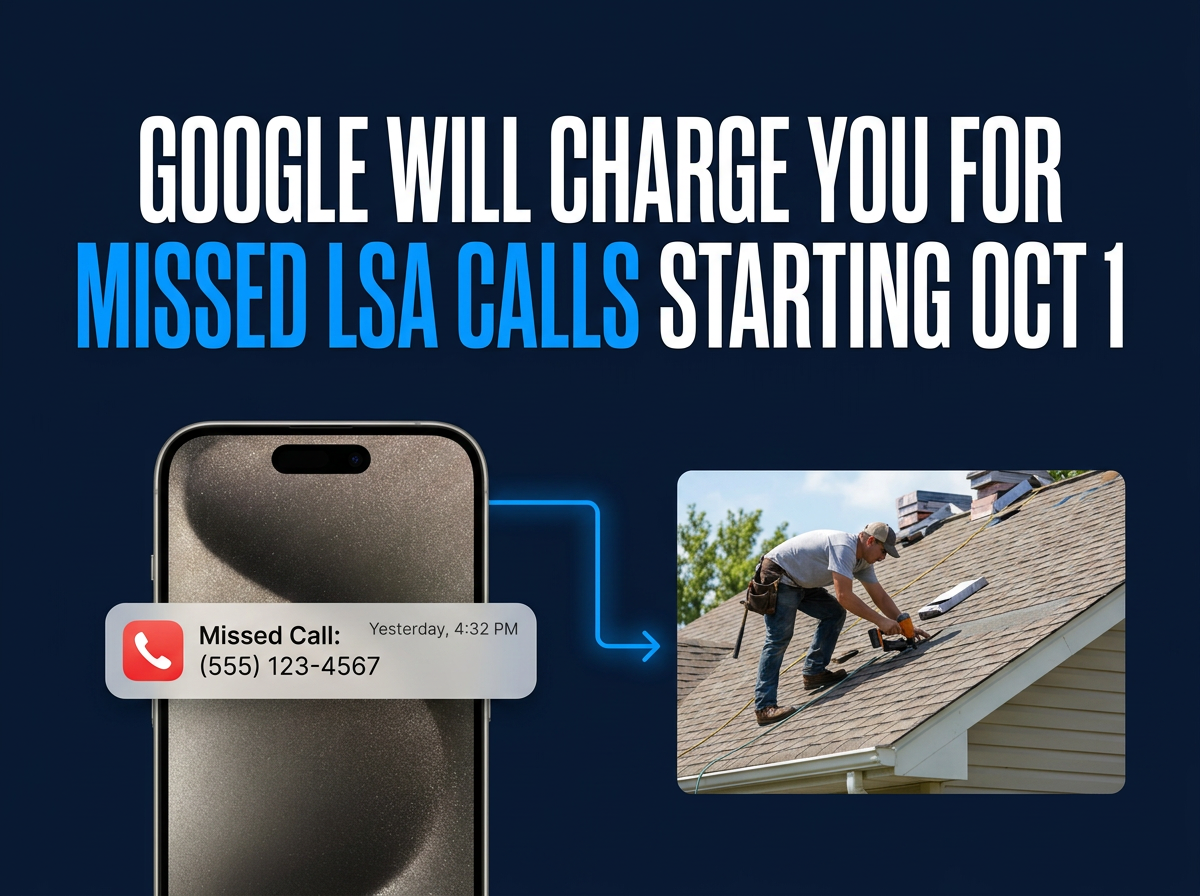
This is why strong automation, missed-call text back, pipeline organization, and follow-up systems matter so much.
4. Targeting The Wrong Keywords
A lot of roofing companies waste budget by targeting keywords that are way too broad.
That causes Google to show ads for:
- roofing jobs
- DIY searches
- roofing materials
- cheap advice
- unrelated searches
The clicks increase, but quality drops.
Good Google Ads campaigns are not just about traffic volume.
They are about intent.
The goal is attracting homeowners actively searching for roofing services in your market right now.
5. Starting With PPC Instead Of Local Services Ads
This is something most agencies will never tell contractors.
For many roofing companies, Local Services Ads are actually a better starting point than traditional Google PPC.
Why?
Because LSAs are often:
- simpler
- lower risk
- higher intent
- built for local contractors
- and focused heavily on trust
That is usually why we recommend contractors start with LSAs first whenever possible before scaling aggressively into Google PPC.
PPC can absolutely work. But without the right systems behind it, it can also become one of the fastest ways to waste money online.
What Actually Makes Roofing Google Ads Work
The roofing companies getting the best results from paid advertising usually have:
- strong reviews
- fast follow-up
- organized lead systems
- dedicated landing pages
- clear tracking
- good communication
- strong local trust
- and operational structure behind the scenes
The ads themselves are only one piece of the growth system.
That is why sustainable growth almost always comes from stronger systems, not just bigger ad budgets.
Final Thoughts
Most roofing companies do not just need more leads.
They need:
- better visibility
- stronger follow-up
- healthier systems
- more trust online
- and more control over growth
Because growth should create more freedom and stability — not more chaos behind the scenes.
Free Tools

Written By
Peyton Roop
Founder, Promotive Marketing
Want This Running
In Your Business?
One call, a straight read on what is slowing growth down, and a plan you can act on whether you hire us or not.


Marketing and growth systems for roofing, exterior, and home service contractors. Built by people who have run a contracting business.
Bloomington and Peru, Illinois
Serving contractors nationwide
Monday to Friday, 8 to 5 CST
© 2026 Promotive Marketing LLC. All rights reserved.